Femtosecond laser processing is increasingly used where material removal must occur with minimal thermal or mechanical influence on the substrate. In medical wire stripping and micro-scale device manufacturing, this requirement arises from the sensitivity of fine conductors, thin metallic structures, and thermally delicate polymers.
What is femtosecond laser processing?
A femtosecond (10⁻¹⁵ s) pulse deposits energy into a material on a timescale shorter than electron–phonon coupling and thermal diffusion. Energy absorption therefore occurs before significant lattice heating or heat conduction into surrounding material.
Material removal proceeds via rapid ionization and plasma formation rather than melt formation and evaporation. This regime is commonly termed cold ablation.
From a manufacturing perspective, the key consequence is a greatly reduced heat-affected zone compared with nanosecond or microsecond pulse lasers.
Why femtosecond processing matters in medical manufacturing
Medical device materials are often sensitive to thermal or mechanical disturbance. Even small alterations can affect:
-
Conductor surface condition
-
Metallurgical state
-
Fatigue behavior
-
Electrical performance
-
Polymer chemistry
Because femtosecond pulses limit heat transfer to surrounding material, underlying material properties remain largely unchanged after processing. This is particularly relevant for implantable or long-life devices where material stability is critical.
Femtosecond laser wire stripping
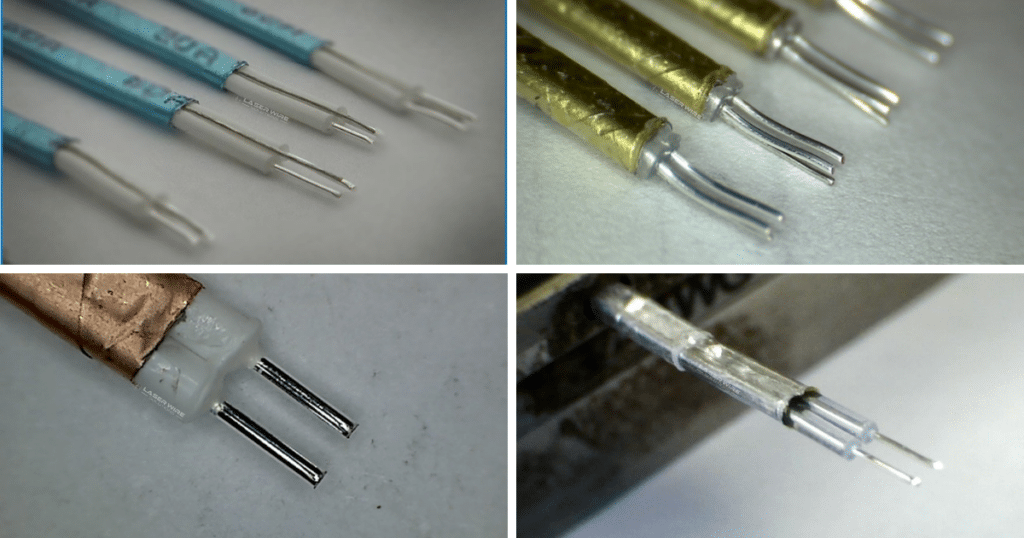
Medical wire stripping must remove insulation while preserving conductor integrity for downstream joining. Conductors are frequently ≤100 µm diameter and fatigue-critical, with insulation systems such as polyimide or fluoropolymers that have low thermal tolerance.
Limits of conventional stripping methods
Mechanical stripping can introduce:
-
Surface scoring or nicks
-
Plastic deformation
-
Work hardening
-
Residual stress
Thermal stripping (hot blade or longer-pulse laser) can introduce:
-
Melted or recast polymer
-
Thermal oxidation or tempering of conductor surface
-
Residue deposition
-
Dimensional variability
For fine medical wires, these effects influence weld behavior and fatigue life.
How femtosecond stripping behaves on insulated wire
With femtosecond pulses:
-
Polymer insulation is removed by direct ablation rather than melting
-
Conductor temperature rise is minimal
-
No recast layer forms on insulation edges
-
Conductor microstructure and oxide state remain largely unchanged
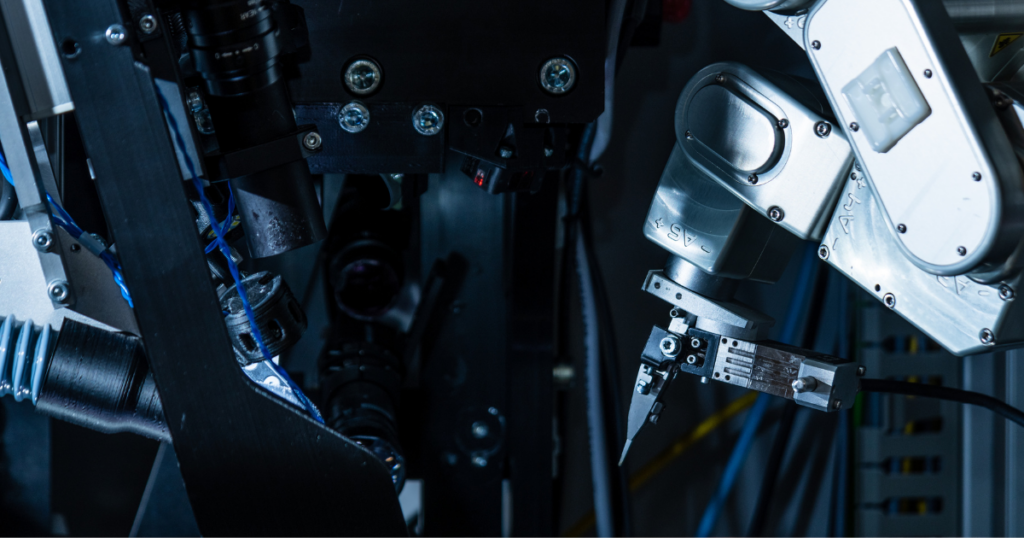
Strip length and geometry are defined by beam positioning rather than tooling, enabling micron-scale repeatability without mechanical contact.
Implications for downstream joining
Conductor condition after stripping directly affects:
-
Laser weld absorption
-
Resistance weld nugget formation
-
Electrical contact resistance
-
Fatigue performance
Thermally altered or mechanically damaged surfaces change joint formation behavior. Femtosecond stripping minimizes these variables by preserving the as-drawn conductor surface state.
Femtosecond processing of medical device materials
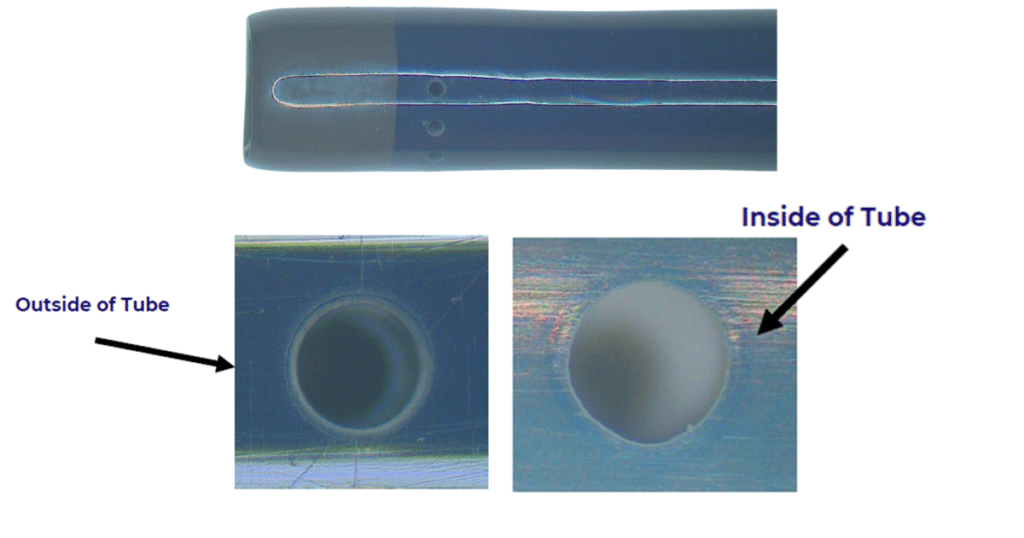
Beyond wire stripping, femtosecond ablation is used where micro-features must be introduced without altering bulk material properties.
Metals
For thin metallic structures and fine features:
-
Minimal melt zone
-
Sharp edge definition
-
Limited phase transformation
-
Low residual stress introduction
This is relevant for thin-wall implantable components and micro-scale structural features.
Polymers
Medical polymers such as polyimide, PTFE, and silicone degrade under thermal load. Femtosecond ablation enables:
-
Clean feature formation without melt ridge
-
Minimal charring or carbonization
-
Reduced debris adhesion
-
Stable surface chemistry
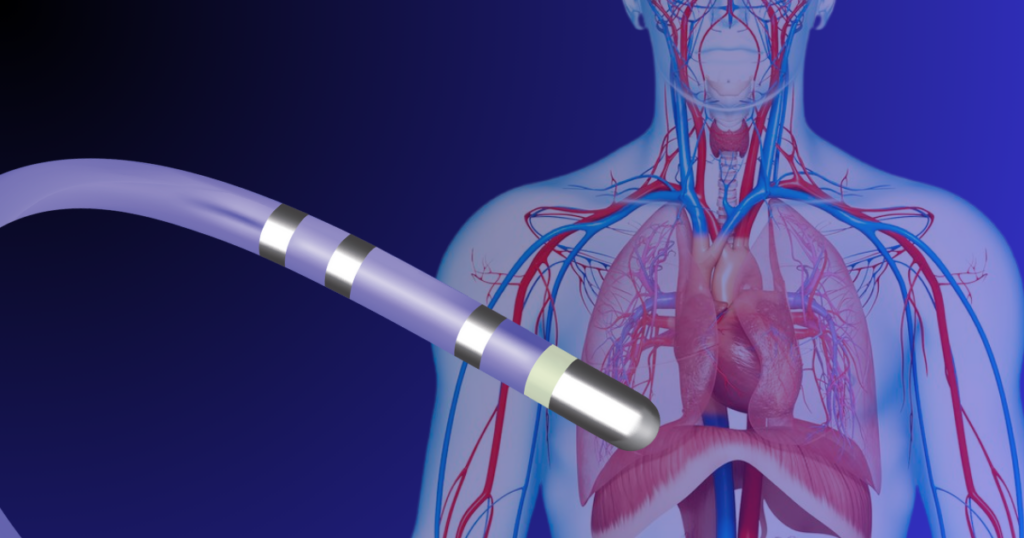
This is relevant for catheter components, flexible substrates, and insulated wires.
Femtosecond vs longer-pulse laser processing
| Aspect | Femtosecond | Nanosecond / microsecond |
|---|---|---|
| Energy coupling | Ultrashort absorption | Thermal diffusion |
| Removal mechanism | Direct ablation | Melt + vaporization |
| Heat-affected zone | Very small | Larger |
| Polymer edge quality | Non-melted | Melt / recast possible |
| Conductor thermal impact | Minimal | Possible |
| Sensitivity to heat accumulation | Low | Higher |
The governing factor is pulse duration relative to thermal diffusion time in the material.
Process stability and validation considerations
In regulated manufacturing, repeatability and material consistency are critical. Femtosecond processing offers:
-
Deterministic ablation thresholds
-
Minimal dependence on melt dynamics
-
Limited heat accumulation per pulse
-
Predictable feature geometry from beam control
These characteristics can simplify validation compared with processes dominated by melt flow or thermal diffusion.
Where femtosecond laser processing is most relevant
Femtosecond processing is particularly suited where:
-
Conductors are fine or fatigue-critical
-
Insulations are thermally sensitive
-
Strip geometry tolerance is tight
-
Downstream joining is reliability-critical
-
Material state must remain unchanged
These conditions are common in implantable wires, catheter electronics, and micro-scale medical assemblies.
Femtosecond laser processing removes material on a timescale shorter than thermal diffusion, producing ablation with minimal heat transfer to surrounding material. In medical wire stripping and micro-component processing, this enables insulation or material removal while preserving conductor microstructure, surface condition, and polymer chemistry.
For fine medical wires and sensitive device materials, the primary advantage is reduced alteration of the underlying substrate, supporting stable joining behavior and long-term reliability in medical manufacturing.
Want to discuss a femtosecond project or laser hole drilling project? Get in touch.