The femtosecond laser has become a cornerstone of modern manufacturing and material processing. With its ultra-short pulse duration – just one quadrillionth of a second – this advanced technology enables manufacturers to achieve levels of precision that traditional tools simply cannot match. As industries push toward smaller, more complex, and highly reliable components, the femtosecond laser is proving to be an indispensable solution.
What Is a Femtosecond Laser?
A femtosecond laser produces pulses that last only a few femtoseconds (10⁻¹⁵ seconds). This extremely short interaction time allows energy to be delivered so quickly that heat does not have time to spread. As a result, materials can be processed with virtually no thermal damage, a process often referred to as cold ablation.
Why Manufacturing Needs Ultra-Precision Tools
Modern industries such as aerospace, electronics, and medical device manufacturing demand incredibly high levels of accuracy. Traditional machining methods often lead to:
- Heat distortion
- Surface damage
- Limited micro-scale precision
The femtosecond laser addresses these issues by offering non-contact processing and unmatched accuracy.
How Femtosecond Laser Works in Material Processing
Ultrashort Pulse Dynamics
The femtosecond laser operates by delivering energy in ultra-short bursts. Because the pulse duration is so brief, energy is confined to a very small region, allowing for precise material removal without affecting surrounding areas.
Cold Ablation Mechanism
Unlike conventional lasers that rely on heat to melt materials, the femtosecond laser removes material through direct bond breaking. This results in:
- Clean, sharp edges
- No melting or recast layers
- Minimal debris
This makes it ideal for high-value and sensitive materials.
Key Components of Industrial Femtosecond Laser Systems
Laser Source and Pulse Generation
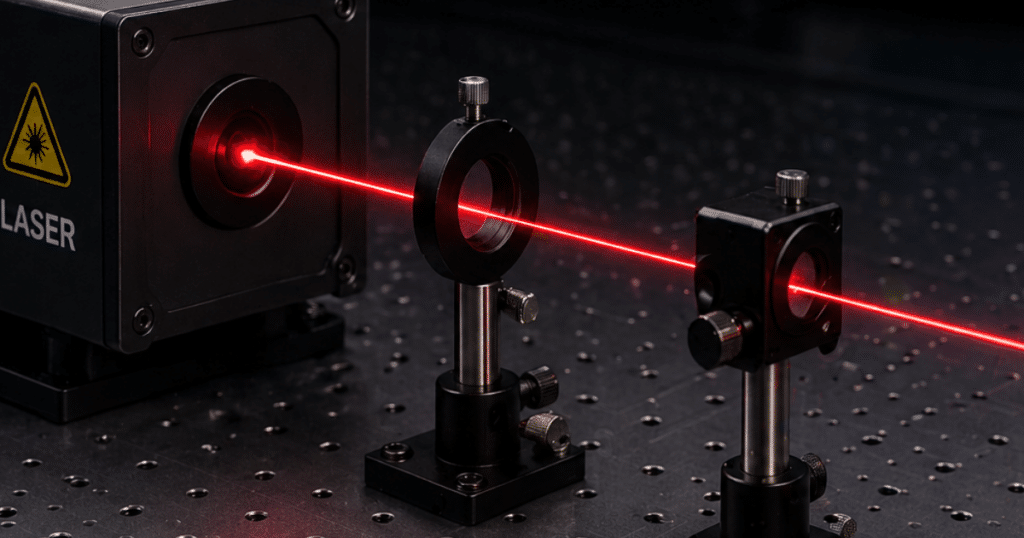
Industrial femtosecond laser systems typically use advanced sources such as fiber lasers or titanium-sapphire lasers. These systems generate stable, high-energy pulses suitable for continuous industrial operation.
Beam Delivery and Motion Control Systems
Precision optics and motion control systems ensure accurate positioning of the laser beam. These systems enable:
- Complex geometries
- High repeatability
- Seamless integration with CNC machines
Core Applications in Manufacturing
The femtosecond laser plays a vital role in multiple manufacturing sectors due to its precision and flexibility.
Micromachining of Metals and Alloys
Femtosecond lasers are widely used to cut, drill, and engrave metals with extreme accuracy.
Medical Device Fabrication
Medical devices demand flawless finishes and strict quality standards. Femtosecond lasers ensure:
- Smooth, burr-free edges
- No contamination
- High precision for tiny components like stents
Semiconductor and Electronics Manufacturing
PCB Structuring
Printed circuit boards (PCBs) require intricate patterns and fine details. Femtosecond lasers enable:
- Precise trace cutting
- High-density circuit layouts
- Minimal damage to surrounding materials
Chip Fabrication
In semiconductor manufacturing, femtosecond lasers are used for:
- Wafer dicing
- Thin-film processing
- Micro-scale patterning
Surface Structuring and Texturing
Femtosecond lasers can modify material surfaces at the micro and nano levels. This improves:
- Adhesion properties
- Friction control
- Surface wettability
Such enhancements are crucial in industries like automotive and biomedical engineering.
Advantages of Femtosecond Laser in Manufacturing
Sub-Micron Precision
The femtosecond laser enables manufacturers to achieve extremely fine details, making it ideal for microfabrication tasks.
Minimal Heat-Affected Zone (HAZ)
Because of its cold ablation process, there is virtually no thermal damage, preserving the material’s integrity.
High Repeatability
Advanced control systems ensure consistent results across large production batches, improving overall product quality.
Challenges and Limitations
Equipment Cost
Femtosecond laser systems are expensive, which can limit adoption for smaller manufacturers.
Throughput Limitations
While highly precise, femtosecond laser processing can be slower compared to traditional methods in high-volume production.
Comparison with Traditional Manufacturing Methods
Mechanical Cutting vs Laser Processing
Mechanical cutting involves physical contact, which can lead to tool wear and material deformation. Femtosecond lasers eliminate these issues with non-contact processing.
Nanosecond vs Femtosecond Lasers
Nanosecond lasers rely on heat, often causing melting and thermal damage. In contrast, femtosecond lasers provide cleaner, more precise results with minimal side effects.
FAQs About Femtosecond Laser
1. Why is femtosecond laser ideal for manufacturing?
Because it provides ultra-precise, heat-free material processing.
2. Can femtosecond lasers process all materials?
They can process metals, polymers, and semiconductors effectively.
3. Is femtosecond laser better than traditional machining?
For precision applications, yes, it offers cleaner and more accurate results.
4. What industries benefit most from femtosecond lasers?
Aerospace, electronics, and medical device industries benefit significantly.
5. What is the biggest limitation of femtosecond lasers?
High cost and relatively slower processing speed.
6. Are femtosecond lasers suitable for mass production?
They are increasingly being adapted, but speed improvements are still ongoing.
The femtosecond laser is redefining manufacturing and material processing by offering unmatched precision, minimal thermal damage, and exceptional versatility. As industries continue to evolve and demand higher-quality components, this technology is becoming a critical tool in modern production environments. Despite challenges such as cost and speed, its benefits far outweigh its limitations, making it a key driver of innovation in advanced manufacturing.