Introduction to Mechanical Stripping in Medical Applications
What Is Mechanical Stripping?
Mechanical stripping refers to the removal of insulation from electrical wires using physical methods such as blades, abrasive tools, or even manual hand techniques. In many industries, this approach is cost-effective and widely used. However, when applied to medical wires, the process becomes far more complex and risky.
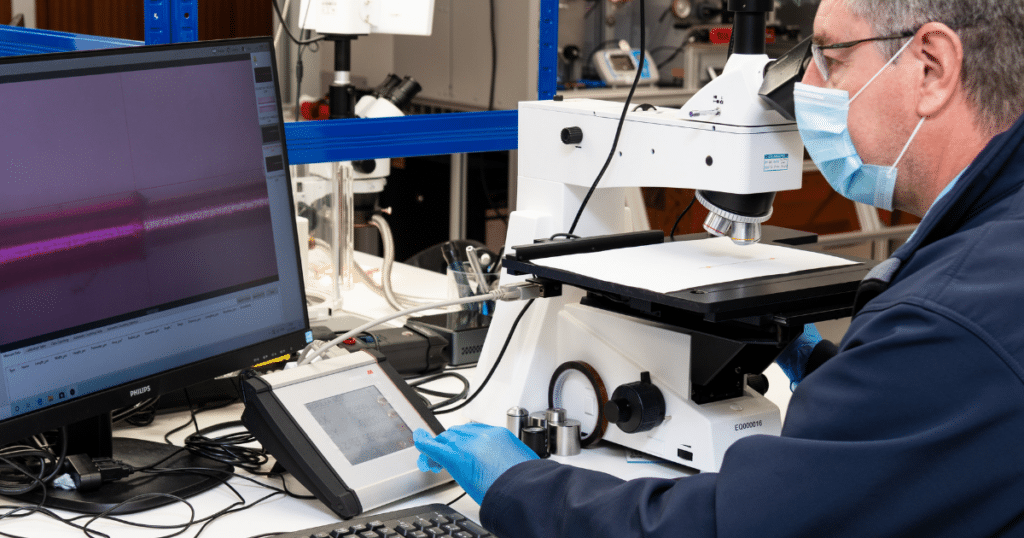
In medical manufacturing, mechanical stripping often includes manual stripping performed by skilled operators, relying on hand-eye coordination and experience. While this might sound precise, the reality is quite different when dealing with ultra-fine, highly sensitive wires.
Why Medical Wires Are Unique
Medical wires are not like standard electrical cables. They are engineered for:
- Miniaturization
- Flexibility
- Biocompatibility
- High reliability
These wires are used in life-critical devices such as pacemakers, catheters, and surgical instruments. As a result, even the smallest defect can lead to serious consequences. This makes traditional mechanical stripping methods unsuitable for such demanding applications.
The Role of Precision in Medical Wire Processing
Microscopic Scale Challenges
Medical wires can be incredibly small – sometimes thinner than a human hair. At this scale:
- The insulation layer is extremely thin
- The conductor is highly fragile
- Visibility is limited, even under magnification
Mechanical tools, whether handheld or automated, struggle to differentiate between insulation and conductor with sufficient accuracy.
Tight Tolerance Requirements
Medical devices require exact specifications. Strip lengths may be less than a millimeter, and there is zero tolerance for:
- Uneven edges
- Residual insulation
- Conductor damage
Mechanical stripping lacks the fine control needed to consistently meet these strict requirements.
Material Sensitivity of Medical Wires
Delicate Conductors Explained
The conductors used in medical wires are often made from soft, flexible materials such as annealed copper or specialized alloys. These materials are chosen for flexibility rather than strength.
Mechanical stripping can easily:
- Nick the surface
- Stretch the wire
- Break individual strands
Even minor damage can compromise electrical performance.
Advanced Insulation Materials
Medical wires often feature high-performance insulation materials like:
- PTFE (Teflon)
- Polyimide
- Silicone
These materials are designed to be:
- Chemically resistant
- Heat-resistant
- Extremely durable
Ironically, this durability makes them harder to strip mechanically without applying excessive force, increasing the risk of damage.
Human Factor: Why Manual Mechanical Stripping Falls Short
Limitations of Operator Skill
Even the most experienced operators cannot consistently achieve:
- Micron-level precision
- Uniform strip lengths
- Damage-free results
Human hands naturally introduce slight tremors and inconsistencies, which become significant at such small scales.
Variability and Fatigue
Manual stripping is highly dependent on the operator’s condition. Factors like:
- Fatigue
- Eye strain
- Repetition
can reduce accuracy over time. This leads to variability not only between operators but also within the same operator across different shifts.
Lack of Repeatability in Mechanical Stripping
Inconsistent Output Across Batches
Medical manufacturing demands consistency across thousands or millions of units. Mechanical stripping, especially manual methods, often produces:
- Variations in strip length
- Inconsistent insulation removal
- Variable conductor quality
This inconsistency leads to higher rejection rates.
Challenges in Scaling Production
Scaling manual processes is inherently difficult. Training new operators takes time, and maintaining consistent quality across teams is nearly impossible.
Risk of Conductor Damage
Micro-Nicks and Strand Breakage
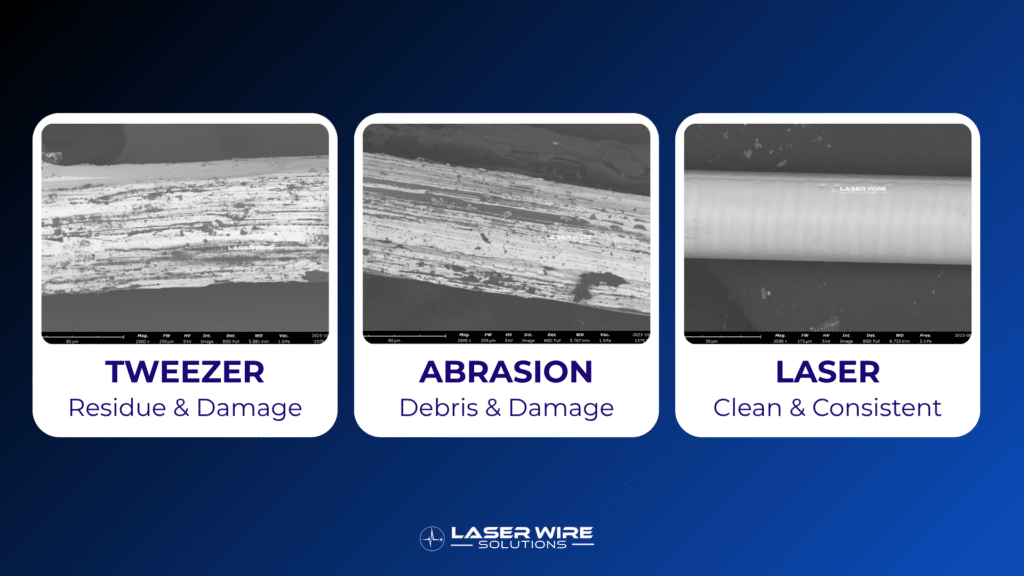
Mechanical stripping frequently causes microscopic damage that may not be visible during inspection. These include:
- Surface nicks
- Partial strand cuts
- Internal stress points
Long-Term Reliability Issues
Such defects may not cause immediate failure but can lead to:
- Reduced lifespan
- Intermittent electrical issues
- Catastrophic failure in critical applications
In medical devices, this level of risk is unacceptable.
Cleanliness and Contamination Risks
Particulate Generation
Mechanical stripping can produce debris such as:
- Insulation particles
- Metal fragments
These contaminants can interfere with device performance or compromise sterility.
Regulatory Cleanliness Standards
Medical manufacturing must meet strict cleanliness standards set by organizations like the U.S. Food and Drug Administration (FDA). Any contamination introduced during stripping can lead to compliance failures.
Process Control and Validation Challenges
Difficulty in Standardization
Mechanical and manual stripping processes are difficult to standardize due to their reliance on human skill and physical tools.
Regulatory Compliance Issues
Medical device manufacturing requires validated processes that are:
- Repeatable
- Documented
- Controlled
Mechanical stripping often fails to meet these criteria, making it unsuitable for regulated environments.
Multi-Layer Insulation Complexities
Layered Wire Structures
Some medical wires feature multiple insulation layers, each serving a specific function such as electrical insulation or biocompatibility.
Inability to Selectively Strip Layers
Mechanical methods cannot easily remove one layer without affecting others, leading to:
- Over-stripping
- Damage to inner layers
- Functional compromise
Alternatives to Mechanical Stripping
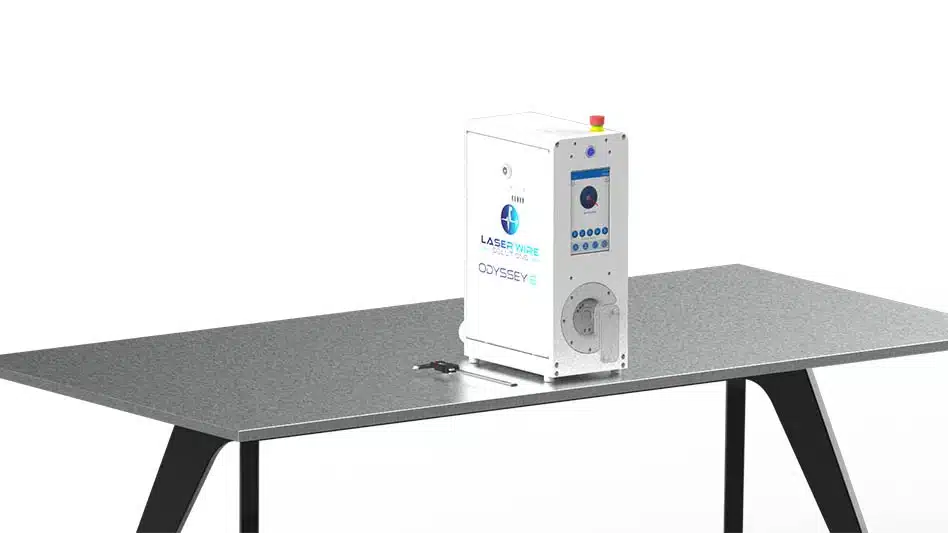
Laser Stripping Advantages
Laser stripping offers:
- Non-contact processing
- High precision
- Repeatability
It eliminates mechanical stress and significantly reduces the risk of damage.
Thermal and Chemical Methods
Other alternatives include:
- Thermal stripping (controlled heat)
- Chemical stripping (material-specific solutions) – important to note that this is being phased out.
These methods provide better control and consistency compared to mechanical approaches.
When (If Ever) Mechanical Stripping Can Work
Limited Use Cases
Mechanical stripping may still be used in:
- Non-critical applications
- Larger wires with thicker insulation
- Prototyping or low-volume production
Risk Mitigation Strategies
If mechanical stripping must be used, consider:
- Enhanced operator training
- Use of precision tools
- Strict inspection protocols
Even then, risks remain significantly higher than with advanced methods.
FAQs About Mechanical Stripping Fails on Medical Wires
1. Why is mechanical stripping not suitable for medical wires?
Because it lacks the precision and consistency required for ultra-fine, sensitive wires used in medical devices.
2. Can skilled operators overcome the limitations?
No. Even highly skilled operators cannot achieve the repeatability and microscopic precision required.
3. What types of damage can occur during mechanical stripping?
Common issues include micro-nicks, strand breakage, and deformation of the conductor.
4. Are there safer alternatives to mechanical stripping?
Yes, laser, thermal, and chemical stripping methods are widely preferred. But thermal can introduce damage to conductors, and chemical stripping is being phased out (with bans coming into place) due to EHS risks.
5. Does mechanical stripping affect regulatory compliance?
Yes, it often fails to meet strict validation and cleanliness standards required in medical manufacturing. Whereas laser stripping can be fully validated.
6. Is mechanical stripping ever acceptable in medical applications?
Only in limited, non-critical scenarios with less demanding requirements.
Mechanical stripping fails on medical wires because it cannot meet the extreme precision, consistency, and cleanliness standards required in medical device manufacturing. Whether performed using tools or by hand, the process introduces too much variability and risk.
In an industry where reliability can directly impact patient safety, manufacturers must rely on more advanced, controlled methods. While mechanical stripping may still have niche applications, it is largely unsuitable for modern medical wire processing.
For further reading on medical device standards, visit the official FDA website: https://www.fda.gov/