In today’s rapidly evolving digital landscape, laser foil stripping for shielded cables is becoming a critical innovation in cable manufacturing. As data centers expand to support cloud computing, artificial intelligence, and ultra-fast connectivity, the demand for reliable, high-performance cabling continues to surge.
Shielded cables play a vital role in maintaining signal integrity and minimizing electromagnetic interference (EMI). However, while cable designs have advanced significantly, many manufacturing processes, especially foil stripping, have lagged behind.
This gap creates inefficiencies, quality risks, and production bottlenecks that manufacturers can no longer afford.
The Limitations of Traditional Foil Stripping Methods
Why Mechanical Blade Stripping Falls Short
Traditional foil stripping relies on mechanical blades to remove delicate shielding layers. While this method has been widely used, it introduces several challenges:
- Physical contact damages thin foil layers
- Inconsistent cuts lead to irregular stripping
- Tool wear reduces precision over time
- Operator skill heavily impacts results
In high-speed data environments, even minor inconsistencies can lead to major performance issues.
The Hidden Risks: Tearing, Debris, and Short Circuits
How Foil Damage Impacts Cable Performance
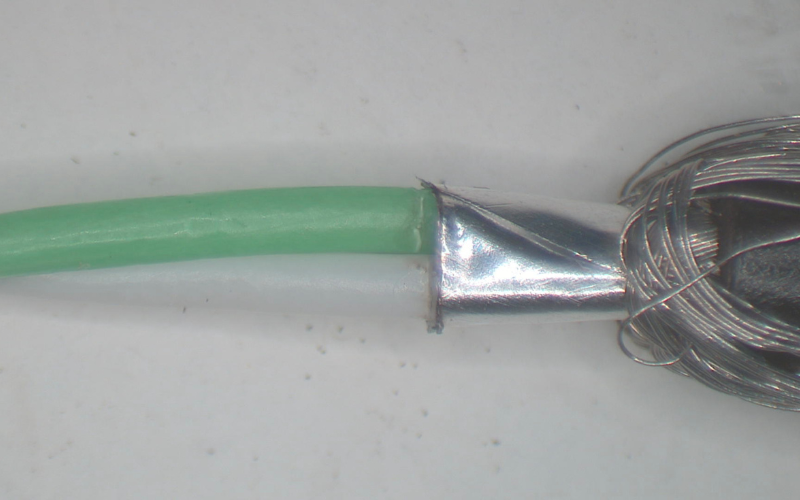
Foil materials, typically aluminum or laminated composites, are extremely thin and fragile. Mechanical stripping often results in:
- Foil tearing, especially in multi-layer constructions
- Jagged edges that compromise shielding integrity
- Loose conductive fragments inside the cable
- Incomplete removal, leading to inconsistent shielding
Consequences in Data Center Applications
These defects can cause:
- Signal degradation
- Intermittent connectivity issues
- Increased electromagnetic interference
- Short circuits due to conductive debris
- Higher scrap and rework costs
In mission-critical environments like data centers, these risks are simply unacceptable.
Modern Cable Design Challenges
Increasing Complexity in Shielded Cables
Today’s cables are more advanced than ever, featuring:
- Tighter tolerances
- Ultra-thin shielding layers
- Multi-layer foil and braid combinations
- High-density configurations
Mechanical stripping methods struggle to keep up with these evolving requirements.
Laser Foil Stripping for Shielded Cables: A Game-Changing Solution
What Is Laser Foil Stripping?
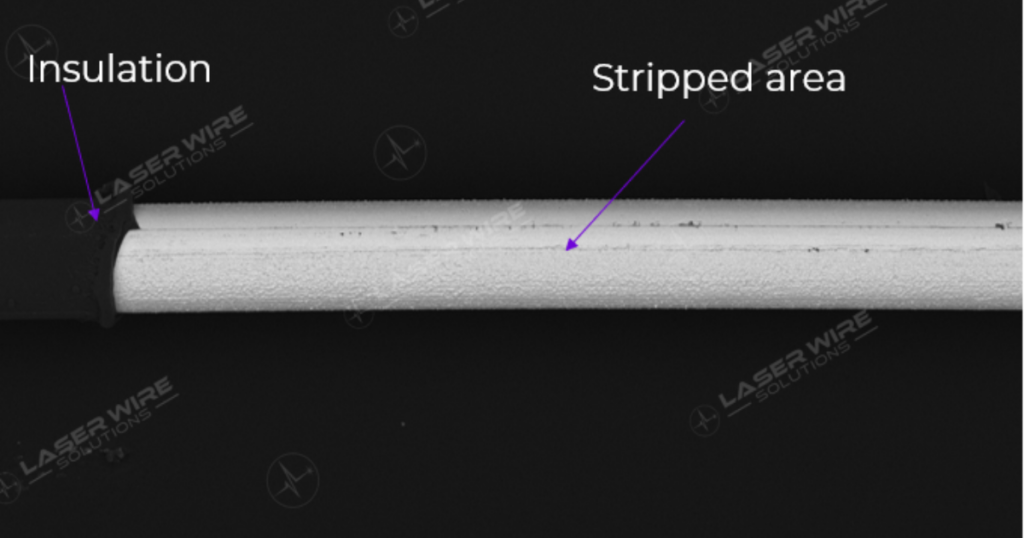
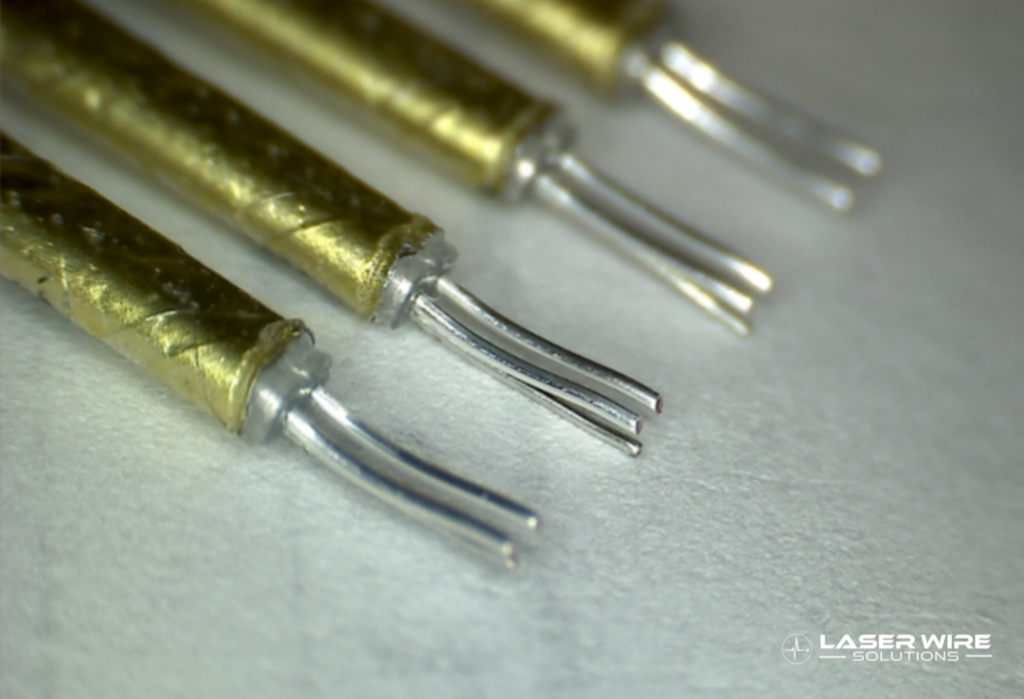
Laser foil stripping is a non-contact process that uses a precisely controlled laser beam to remove shielding material without touching the cable.
Instead of cutting or tearing, the laser ablates the foil layer cleanly and accurately.
Key Benefits of Laser Foil Stripping
1. Eliminates Tearing Completely
Laser processing removes foil without mechanical stress, ensuring smooth, clean edges every time.
2. Prevents Conductive Debris
No physical contact means no loose fragments, significantly reducing the risk of short circuits.
3. High Precision and Accuracy
Laser systems deliver consistent results across every cable, regardless of complexity.
4. Selective Material Removal
Foil can be removed without damaging insulation or conductors.
5. Repeatable and Scalable
Digitally controlled parameters ensure identical results across batches and production lines.
Eliminating Shorts at the Source
Why Upstream Quality Matters
Short circuits caused by foil debris are often difficult to detect during production. Laser foil stripping addresses this issue at its root:
- Clean ablation prevents leftover fragments
- No deformation of surrounding materials
- Consistent processing eliminates variability
The result is a more reliable and predictable manufacturing process.
Consistency Without Operator Dependency
Automation and Digital Precision
Unlike mechanical stripping, laser systems are not dependent on operator skill.
Once optimized:
- Parameters are fully programmable
- No manual adjustments are required
- Performance remains stable over time
This leads to:
- Reduced human error
- Improved production efficiency
- Faster scaling to high-volume manufacturing
Applications of Laser Foil Stripping for Shielded Cables
Laser technology is particularly effective for:
- Aluminum and laminated foils
- Multi-layer shielding constructions
- Fine and ultra-fine gauge cables
- High-performance data center cables
- Tight tolerance stripping requirements
It also enables processing of cable designs that are difficult, or impossible, to handle with traditional methods.
From Process Risk to Process Control
Why Process Development Is Key
Many manufacturers have experimented with laser technology but struggled with implementation. The issue is often not the laser itself, but the lack of proper process development.
A successful transition requires:
- Application-specific testing
- Parameter optimization
- Production validation
When done correctly, laser foil stripping becomes a fully controlled, production-ready solution.
Why Data Centers Demand Better Cable Manufacturing
As data centers continue to scale, the tolerance for failure is shrinking.
Modern requirements include:
- Zero downtime expectations
- High-speed data transmission
- Increased cable density
- Long-term reliability
Laser foil stripping directly supports these demands by improving quality and consistency.
Is It Time to Replace Mechanical Stripping?
If your current process involves mechanical blades, consider the risks:
- Are defects increasing?
- Is rework impacting profitability?
- Are you struggling with new cable designs?
If the answer is yes, transitioning to laser technology could be a strategic advantage.
FAQs: Laser Foil Stripping for Shielded Cables
1. What is laser foil stripping?
Laser foil stripping is a non-contact method that uses a laser beam to remove shielding material without damaging the cable.
2. How does laser stripping prevent short circuits?
It eliminates conductive debris and ensures clean removal, reducing the risk of internal shorts.
3. Is laser stripping suitable for all cable types?
It works best for shielded cables, especially those with delicate or multi-layer foil constructions.
4. Does laser stripping improve production efficiency?
Yes, it reduces scrap, minimizes rework, and ensures consistent results across production runs.
5. Is it cost-effective compared to mechanical methods?
While initial investment may be higher, long-term savings from reduced defects and improved quality often outweigh the costs.
6. Can laser stripping handle complex cable designs?
Absolutely. It is ideal for modern, high-performance cables with tight tolerances and intricate structures.
The Future of Cable Manufacturing
Laser Foil Stripping for Shielded Cables represents a major advancement in cable manufacturing technology. By eliminating tearing, preventing debris, and ensuring consistent quality, it addresses the core limitations of traditional mechanical stripping.
As data center demands continue to grow, manufacturers must adopt more precise, reliable, and scalable solutions.
Laser technology offers exactly that. A shift from process risk to process control.