Non-contact enamel removal for soldering, crimping and welding preparation
Large Magnet Wire Stripping
Large magnet wire is used in motors, coils, transformers and high-value electrical assemblies where reliable conductor preparation is critical.
Before soldering, crimping, welding or electrical testing, the insulation must be removed cleanly without damaging the conductor beneath.
Why Conventional Methods Fail
Conductor Damage Risk
Mechanical scraping, rotary blades and abrasive tools physically remove the insulation from the conductor. If the process is too aggressive, the copper can be marked, nicked or deformed.
Residue and Contamination
Thermal or flame stripping can char the enamel coating and leave carbon residue. Chemical stripping introduces rinsing, neutralisation and waste disposal requirements.
Process Variation
Tool wear, manual handling and operator technique can all affect strip quality. This can create inconsistency between parts, shifts and production runs.
Why Laser Stripping is Different
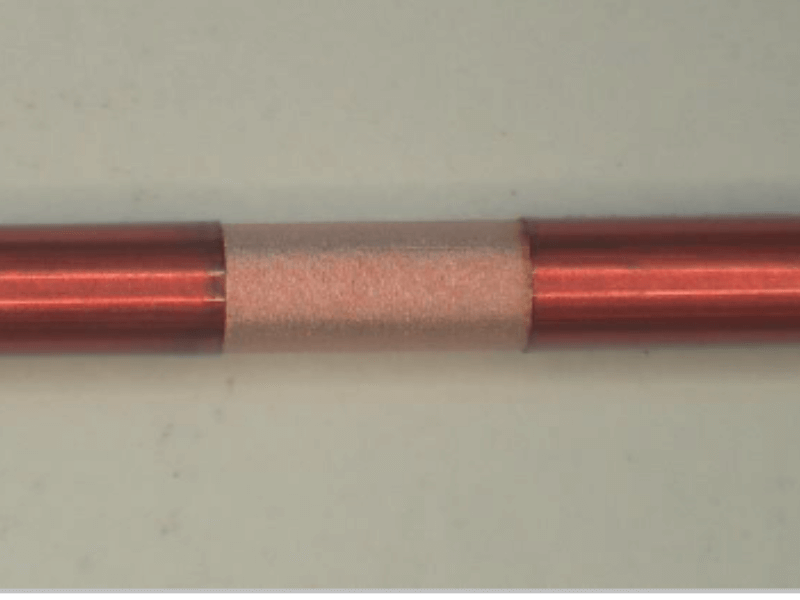
Laser ablation removes insulation without physical contact with the conductor.
Instead of scraping, burning or chemically dissolving the coating, the laser uses a controlled energy pattern to remove the insulation from the required area. This reduces reliance on blades, chemicals and operator technique.
For round magnet wire, the process can provide full 360° stripping coverage, helping create a repeatable surface for downstream soldering, crimping or welding.
Stripping Method Comparison
Method
How It Works
The Outcome
Thermal / Flame Stripping
Heat is applied to burn or char the enamel coating, followed by
brushing or wiping to remove the residue.
Difficult to control, can leave carbon residue and may require
secondary cleaning before soldering, crimping or welding.
Mechanical Scraping
Rotary blades, scrapers or abrasive tools physically shave the
insulation from the conductor.
Tool wear, setup variation and blade contact can lead to inconsistent
strip quality, copper marking, nicks or conductor deformation.
Chemical Stripping
The wire is immersed in chemical stripper, molten salts or
solvent-based systems to dissolve or break down the coating.
Introduces chemical handling, rinsing, neutralisation and waste
disposal. It can also be difficult to localise precisely for controlled
production stripping.
Abrasive / Manual Methods
Sandpaper, wire wool, burning, soldering iron methods or solvents are
used to remove the insulation manually.
Slow, inconsistent and operator-dependent. Suitable for occasional
bench work, but not controlled or repeatable enough for production.
Laser Ablation
A controlled laser process removes the insulation without physical
contact with the conductor. No minimum wire size is required.
Provides non-contact, recipe-controlled insulation removal with
reduced reliance on blades, chemicals and operator technique. Enables
repeatable results with full 360° coverage.
Demonstrated Results Using Laser
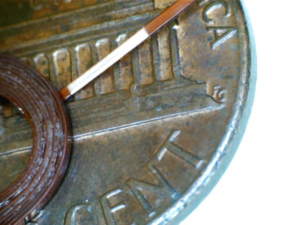
Rectangular Magnet Wire
A 1.72 mm OD magnet wire processed on the Mercury-4 CO₂ laser system. A 2 mm x 10 mm hatch was completed in 6 seconds.
The conductor surface was preserved and the sample passed a solder dip test.
Deep application knowledge in wire, cable and components
Applications Support
From sample evaluation to process development and production support
Reliable Systems
Robust, high quality laser systems designed for long-term performance
Global Support
Local support and service from a global network of experts
Let's Discuss Your Application
FAQ
What is laser magnet wire stripping?
Laser magnet wire stripping uses a controlled laser process to remove enamel or polymer insulation from the conductor without physical contact.
Why use laser stripping instead of scraping or burning?
Laser stripping reduces reliance on blades, brushes, flame or chemicals. This helps improve repeatability and reduce the risk of conductor damage or residue.
Can laser stripping be used before soldering?
Yes. The stripped conductor surface can be developed and tested for soldering suitability.
Can round magnet wire be stripped around the full circumference?
Yes. For suitable round wire applications, the Mercury process can provide 360° stripping coverage.
Can rectangular magnet wire be laser stripped?
Yes. Rectangular wire can be processed using a controlled laser hatch pattern, with surface finish and strip geometry developed around the application.