If your harness production team is already stretched, start by finding the operation that limits accepted output. Keep the approved process running, measure where time is being lost, and test a possible improvement away from production. That gives you evidence for a future decision while the team stays focused on today’s deliveries.
The UK Ministry of Defence and HM Treasury published the Defence Investment Plan on 30 June 2026, outlining major investment choices backed by £298 billion over four years. The MOD’s SME Action Plan also sets a target to spend an additional £2.5 billion with SMEs by summer 2028. Those are government commitments and targets. Your own production decisions still depend on the orders, forecasts and capacity constraints you can see.
In conversations with some suppliers, we’re hearing a practical tension: delivery schedules are full, and the people needed to trial or qualify a new process are the same people keeping production moving. For a wire harness manufacturer, the useful question is: what can we learn now, before we have a window to change anything?
Find the operation that limits accepted output
Start with one recurring harness or cable assembly that regularly ties up operator time, waits for inspection or comes back for rework. Follow a representative batch through wire preparation, termination and inspection. Record the setup, handling, processing and checking time separately. Include parts that need a second pass and parts that are scrapped.
This matters because the slowest-looking operation may be working as intended. A wire stripping tool might cut quickly, while operators spend most of their time changing stops for small batches, removing cut jackets or checking the exposed shield. Equally, a faster stripping operation may do little for shipments if completed assemblies are already waiting for inspection.
Ask the people running the job which variants are hardest and why. A particular jacket material may be difficult to remove. A flexible cable may be awkward to locate against a stop. A long assembly may take two hands to support while the operator positions the strip. Those are different problems, and each points to a different trial.
Measure success in parts accepted per staffed hour for the operation you’re studying, then check whether an improvement would help the finished harness move through the next stage. A shorter machine cycle is only useful if it frees capacity you can actually use.
See what you can improve within the approved process
Once you know where the time goes, check what can be addressed using existing approved methods. For example, if changeovers are causing the delay, check whether jobs can be sequenced around shared setups without compromising due dates or traceability. If operators are waiting to make a visual decision, review whether the existing work instruction and approved reference samples make the acceptance criteria clear.
Involve quality early. A new fixture, a different inspection method or a change to how a cable is prepared may still need formal review, even if you keep the same machine. Ask what can be evaluated as an engineering trial and what evidence or customer authorization would be required before production use.
If the current method meets the drawing, produces consistent results and has enough capacity for the expected workload, keeping it may be the right decision. You’ll still have a baseline against which to judge any future change.
Test one difficult wire preparation step off-line
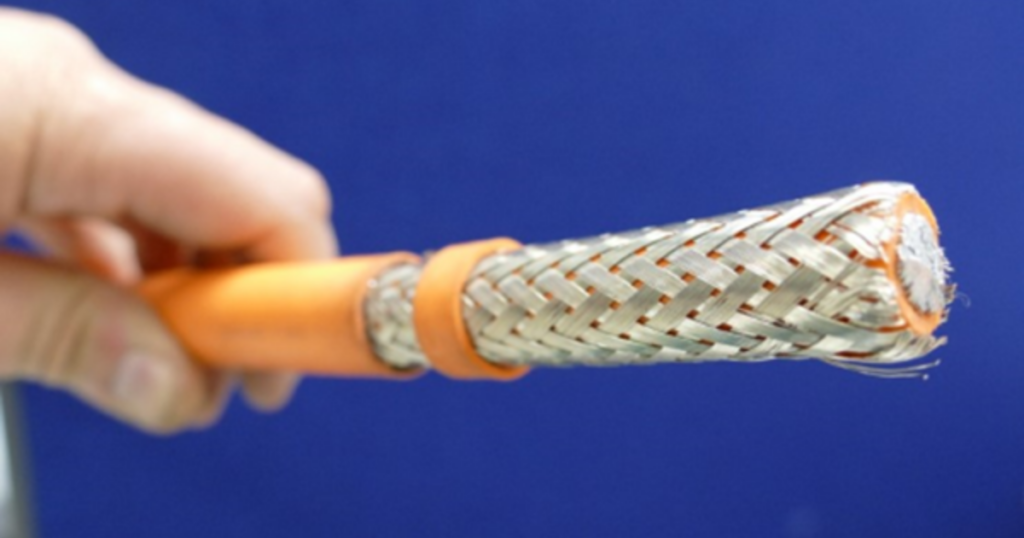
Consider a shielded aerospace cable that needs its outer jacket removed before the braid is terminated. An off-line trial can answer a narrow question: can we expose the required length of braid consistently, in a condition the next operator can use?
Use a representative cable construction. A fluoropolymer jacket over braid and a different jacket over a foil-and-braid stack may have similar outside diameters but behave differently during cutting and removal. Document the layers, nominal dimensions and the retained features that matter. If the cable normally arrives at the station already cut to length or fitted with hardware at one end, reflect that handling condition in the trial.
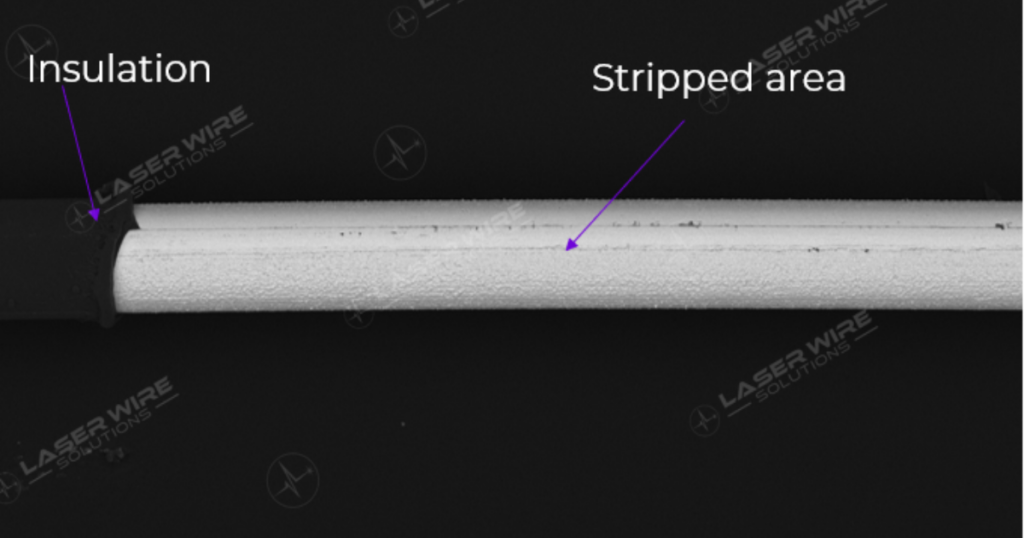
Compare the existing approved method with the candidate method on the whole task: locating the cable, making the cut, removing the jacket and inspecting the result. Mechanical stripping can remain a good fit where the tool consistently meets the acceptance criteria. Laser stripping is worth evaluating where blade contact or access is a concern, but material response and the condition of the retained layers still need to be checked.
Inspect the braid before the termination hardware conceals it, using the criteria and methods called up by the program. Then assemble representative terminations and apply the specified downstream checks. NASA-STD-8739.4A is a useful published example of a harness workmanship standard that treats stripping and shield termination as separate tasks. Your drawing, contract and invoked standards govern what’s acceptable.
Decide what would justify a changeover
Agree up front what would make the trial worth pursuing. That might mean reducing hands-on time on a recurring job, improving consistency between operators, or reducing rework on a difficult cable. Record which variants and material lots were evaluated and what still needs to be tested. A good result on one cable is a reason to investigate further; it does not qualify a family of cables.
Then work backward from a realistic changeover window. Allow time for any required approvals, tooling, operator training and first production checks. If a candidate process needs further development, you can plan that work while the approved route remains in service.
The result might be a case for new equipment, an improvement you can make with the existing setup, or a decision to revisit the issue when volumes change. Each is useful if it is supported by evidence your production and quality teams can act on.
Frequently asked questions
Do we need a capital budget to start?
No equipment purchase is needed to document your current process or discuss feasibility. Agree the scope and cost of any sample trial before it starts.
Can an off-line trial qualify a process for defense production?
An off-line trial can establish initial feasibility and identify what needs further testing. Production release depends on the evidence and approvals required by your program.
What information should we share first?
Start with a non-sensitive description of the cable construction, the operation causing difficulty and what a good result needs to achieve. Agree an appropriate route before sharing controlled drawings, samples or program information.