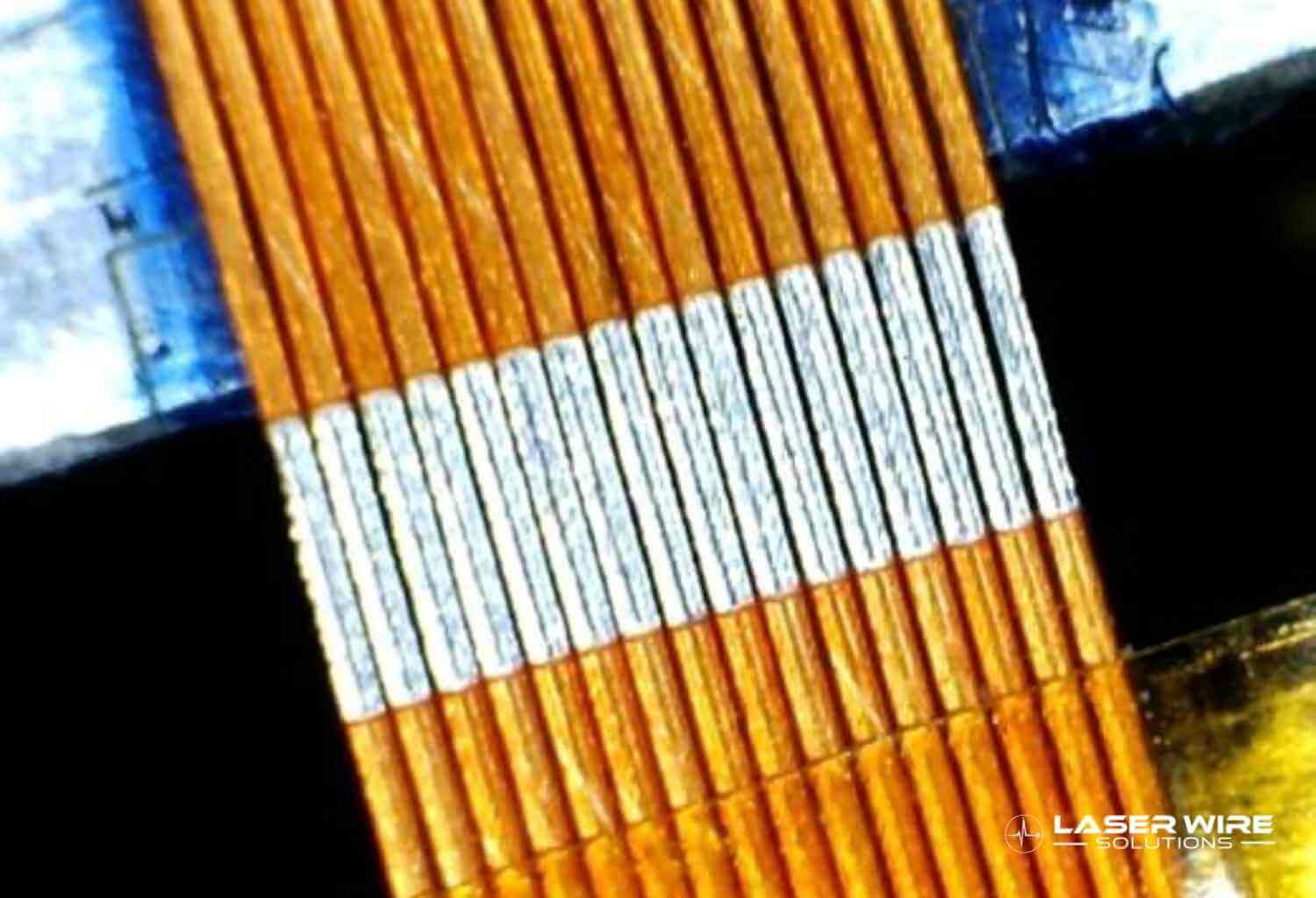
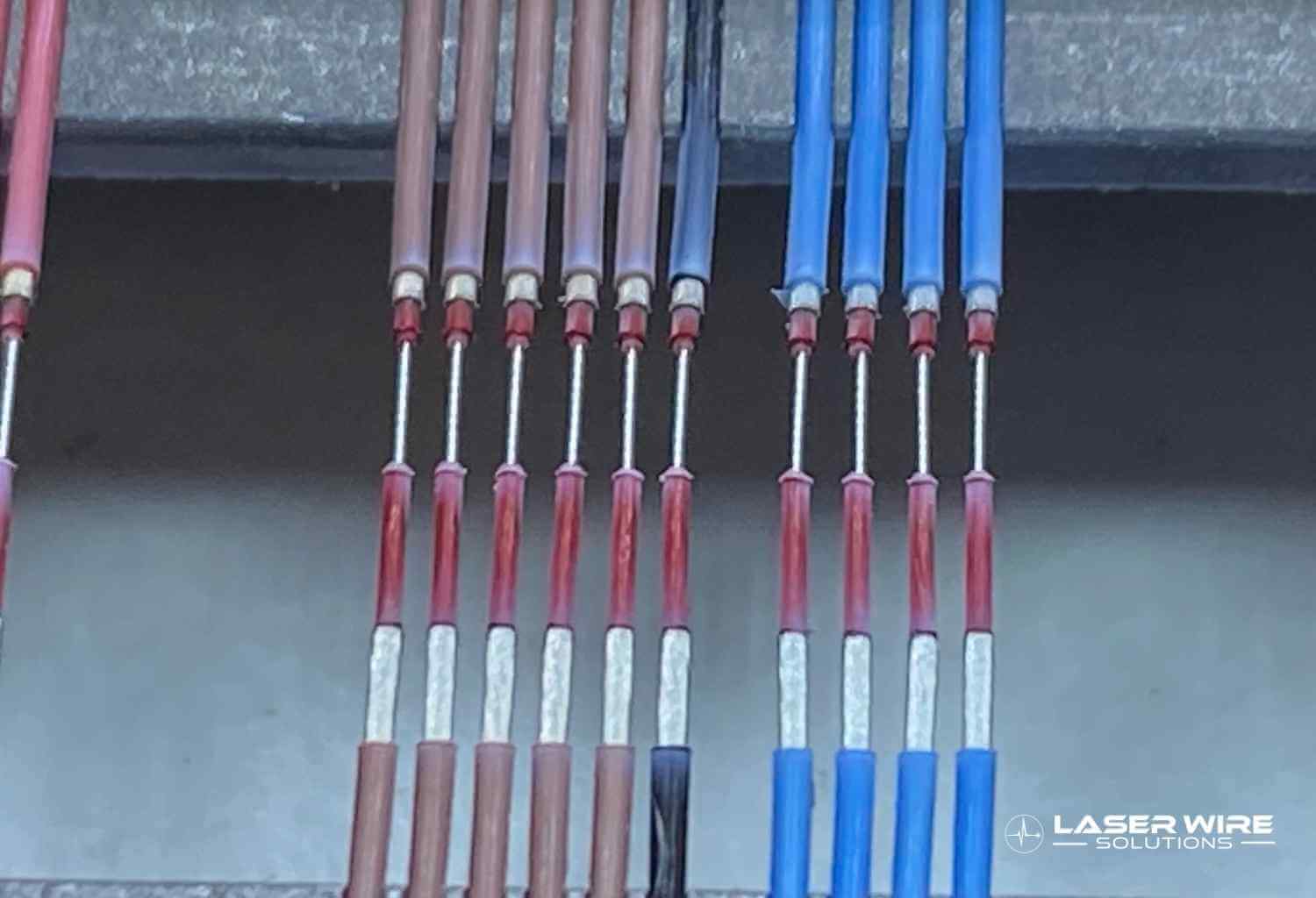
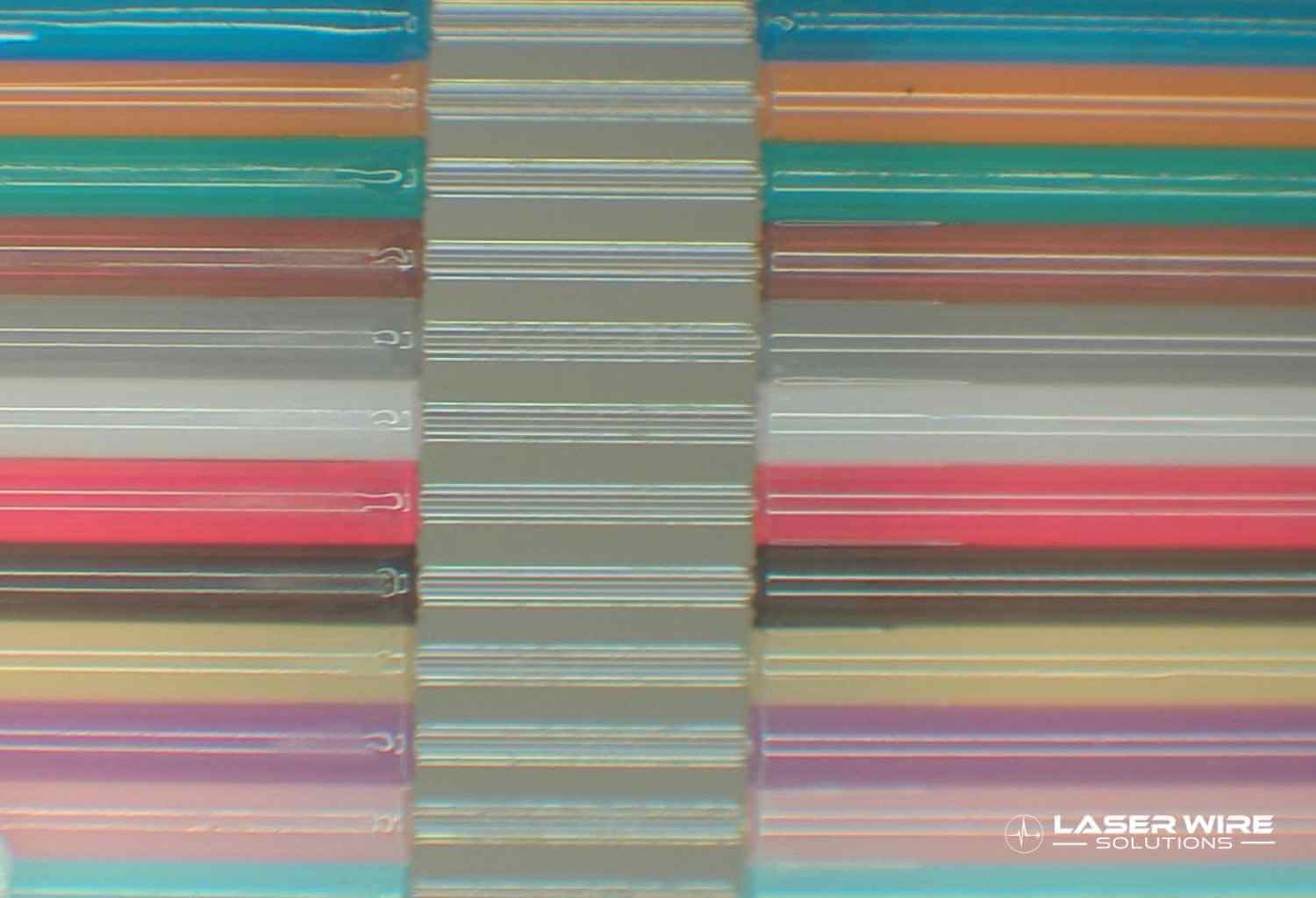
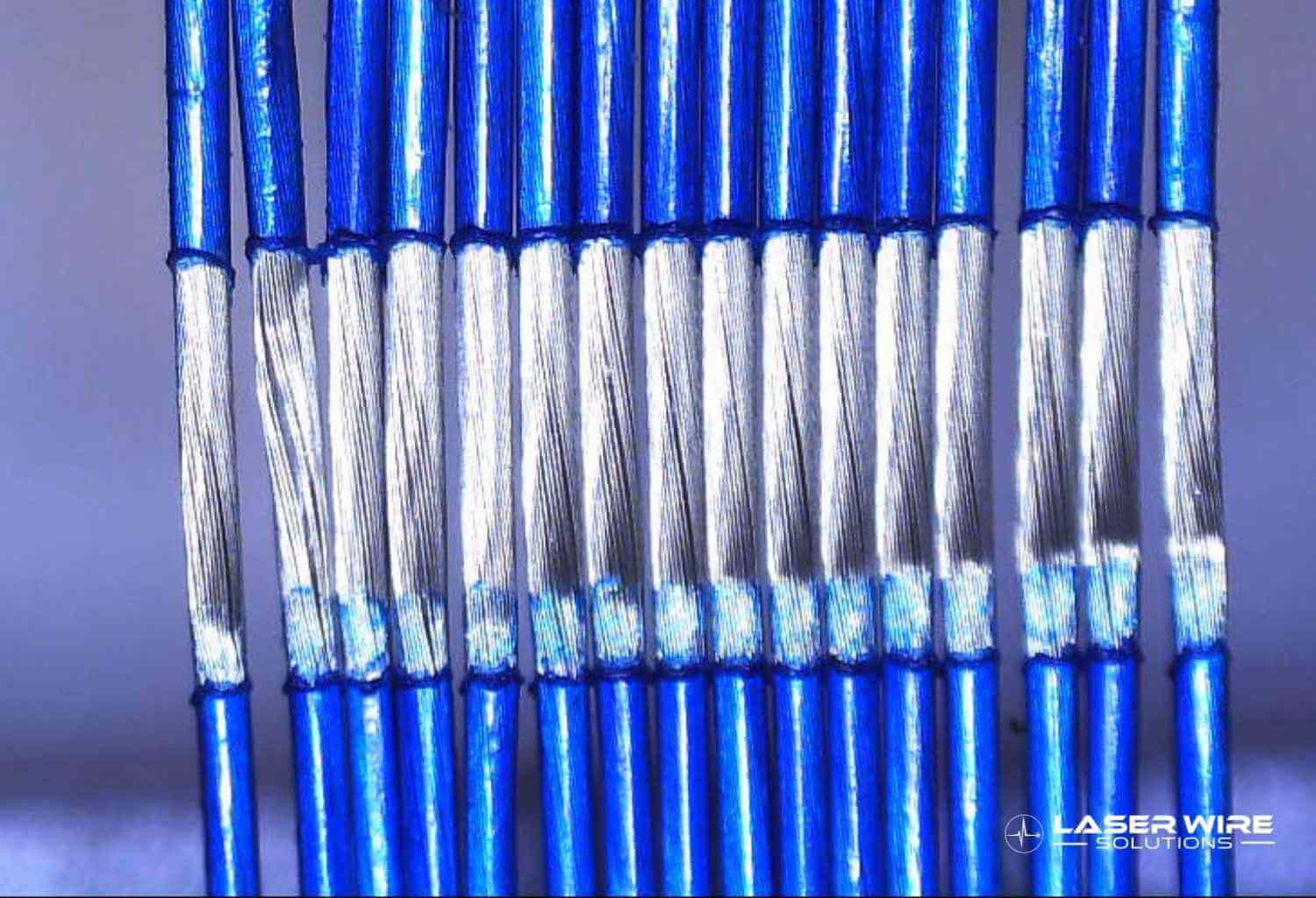
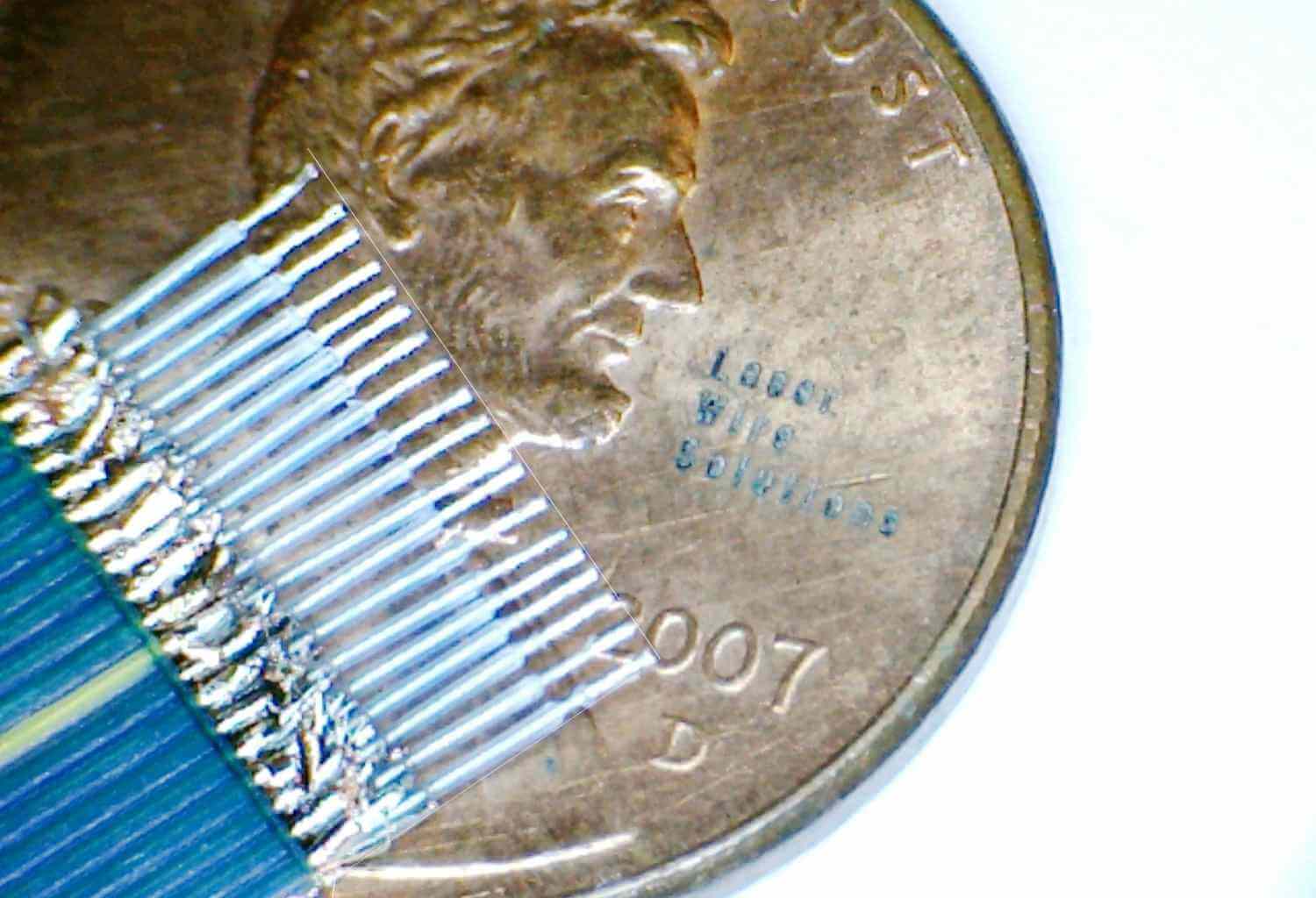
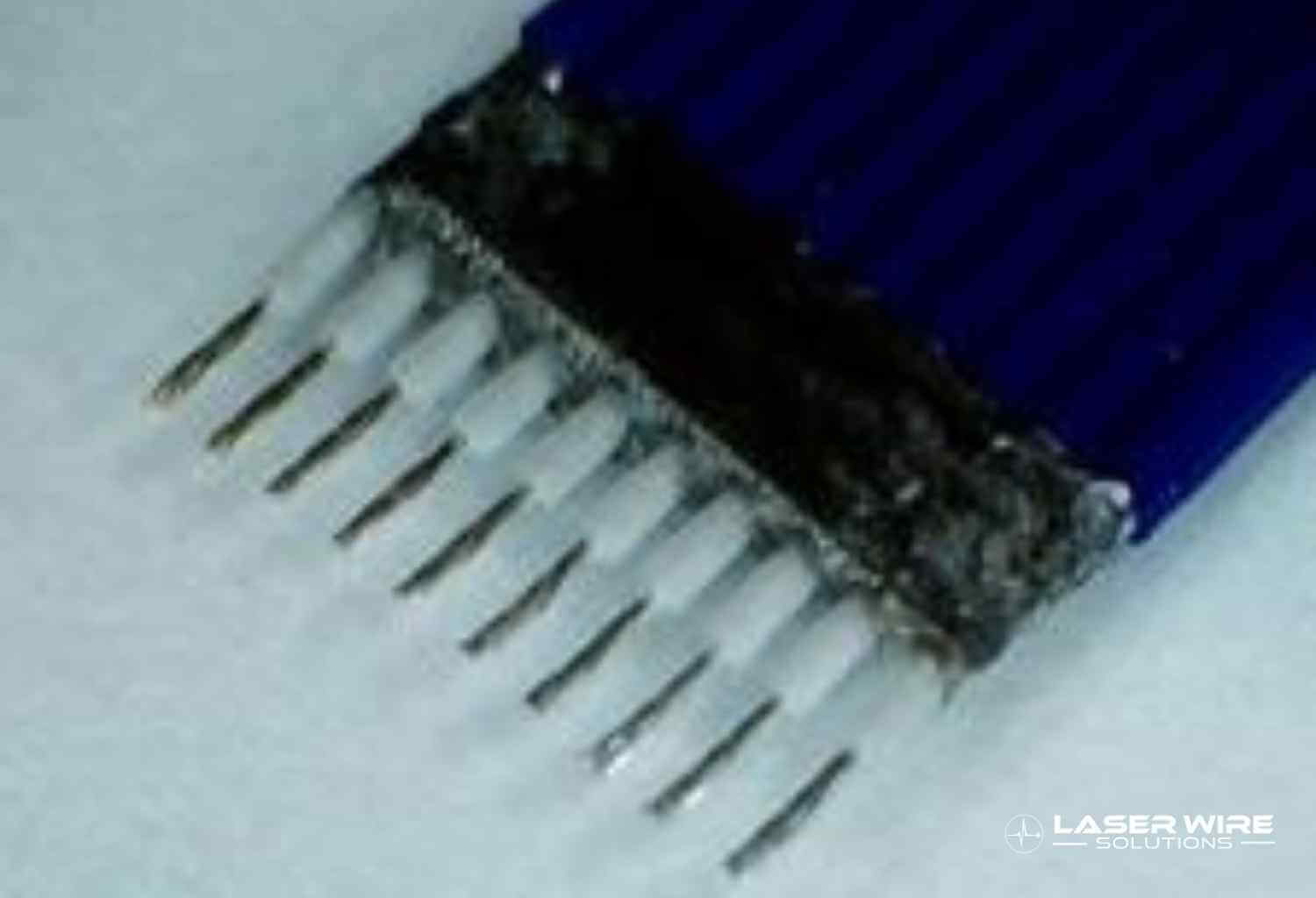
Jacket, Shield and Dielectric Removal
Micro-Coax Processing
These cables are commonly found in medical devices, ultrasound probes, catheters, endoscopy systems, oximetry systems, sensors and other high-reliability interconnect applications.
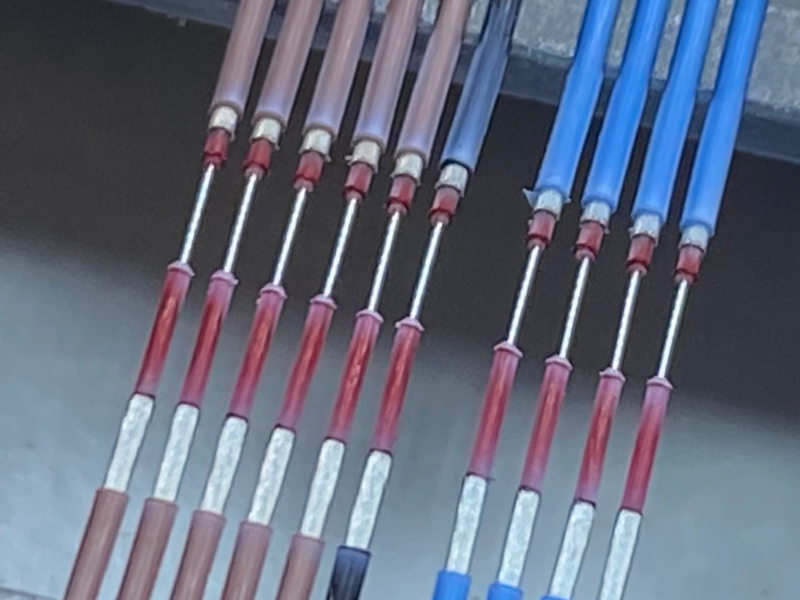
Processing micro-coax is challenging because each cable contains multiple material layers: a centre conductor, dielectric insulation, metallic shield or braid, and an outer polymer jacket. Each layer must be removed cleanly without damaging the layer beneath.
Why Micro-Coax is Difficult to Strip
Extremely Small Geometry
Some designs are under 0.1 mm OD. Manual stripping with a microscope and scalpel requires skilled operators and is difficult to scale.
Multi-Layer Constructions
Jacket, shield and dielectric must be removed in sequence without damaging the layer beneath or the conductor.
Shield & Braid Control
The metallic shield must be cut cleanly all around. Incomplete cuts lead to pulling, distortion and dielectric damage.
High Reliability Requirements
Markings, conductor damage or dielectric defects can affect performance in critical medical devices.
How Dual Wavelength Laser Processing Works
1) Present the Cable
Cable or ribbonized cables are loaded into a guide or fixture plate.
2) Locate & Align
Vision-assisted setup helps ensure accurate positioning.
3) Process the Outer Jacket
CO₂ laser removes or cuts the polymer jacket
4) Cut Shield/Braid
UV laser cleanly cuts the shield or braid at the strip location.
5) Strip Dielectric
CO₂ laser strips the dielectric to expose the center conductor.
6) Inspect & Verify
Inspect for strip length, shield removal and dielectric integrity.
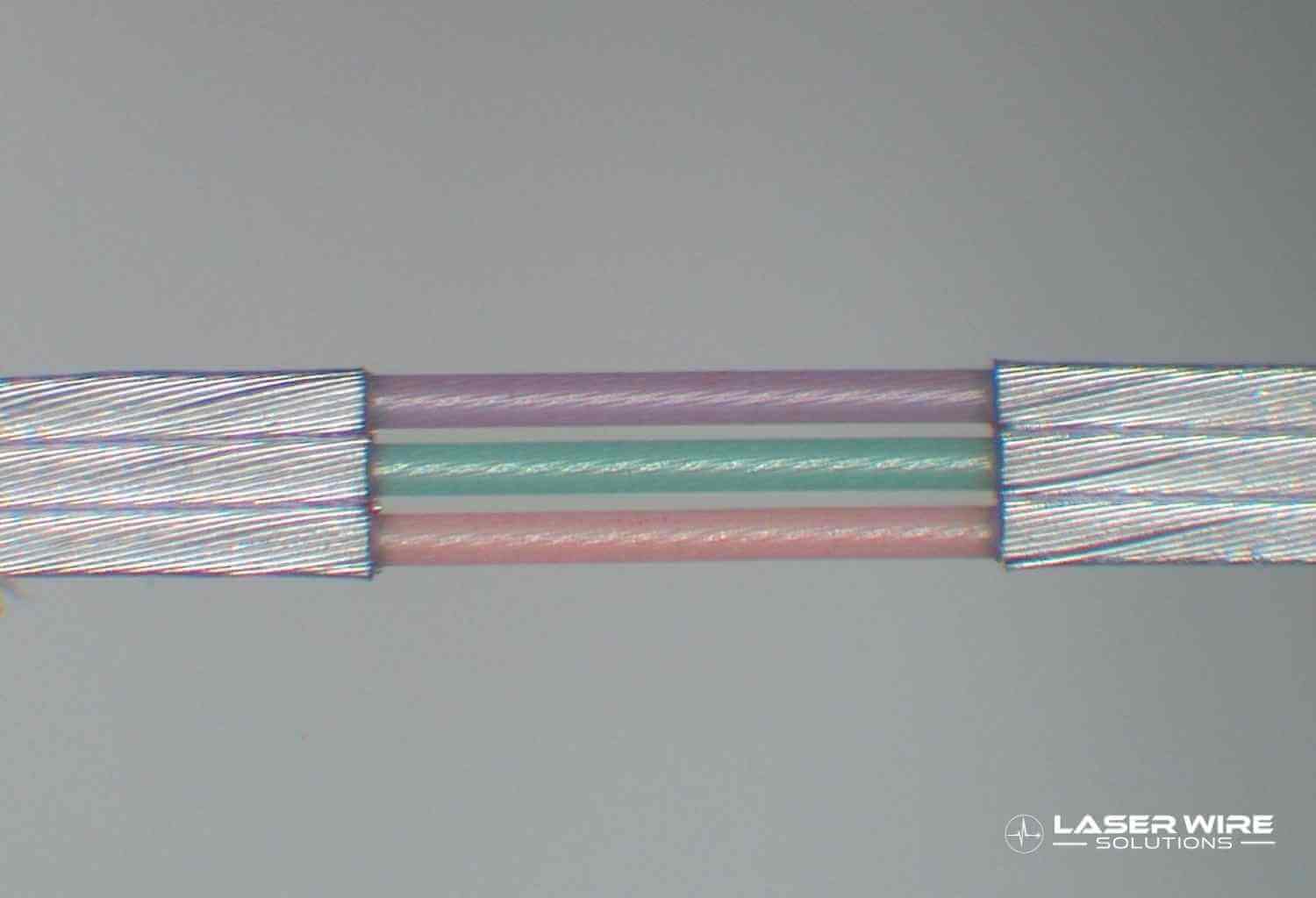
Example Result
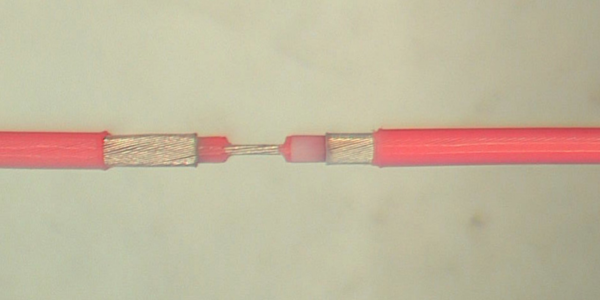
0.51 mm OD micro coaxial conductor of a shielded twisted pair
Typical Applications
- Ultrasound probes
- Catheter assemblies
- Endoscopy systems
- Oximetry systems
- Medical device interconnects
- Advanced sensor cables
- High-speed signal systems
- Ribbonized micro-coax
- RF & imaging cable assemblies
- High-density connector preparation